Conflict to ResolutionDisputes and conflict are part of special education leadership, but how leaders respond can make all the difference. This series equips special education directors with practical strategies to navigate disputes, address concerns early, prevent escalation, and lead confidently through challenging, high-emotion situations. Learn how to turn conflict into opportunities for resolution, collaboration, and stronger relationships.
Session 1 (Free)When a Dispute Lands on Your Desk: What Special Education Directors Should Do Next
Special education disputes demand more than procedural knowledge. This session gives district leaders a practical framework for navigating complaints, mediation, due process, resolution sessions, and facilitated IEPs while maintaining timelines, strengthening collaboration, and keeping the focus on the student.
Session 2, February 9, 2027Conflict is Inevitable. Escalation Isn't: A Systems Approach to Early Dispute ResolutionConflict can drain teams, strain family relationships, and consume leadership attention. This session gives district leaders a practical framework for recognizing persistent conflict, intervening before issues escalate, and building the staff and system capacity needed to keep difficult disagreements productive.
Session 3, February 23, 2027When the Room Gets Hot: Leading Through High Conflict, Emotion, and Adversarial BehaviorHigh-conflict behavior in meetings can quickly shift from disagreement to defensiveness, intimidation, or outright disruption. This session gives special education leaders practical strategies to stay grounded, respond to intense emotions and adversarial behavior, set appropriate boundaries, and reorient difficult conversations toward the student, meaningful progress, and FAPE. Description: High-conflict behavior in meetings can quickly shift from disagreement to defensiveness, intimidation, or outright disruption. This session gives special education leaders practical strategies to stay grounded, respond to intense emotions and adversarial behavior, set appropriate boundaries, and reorient difficult conversations toward the student, meaningful progress, and FAPE.
Registration for Sessions 2 and 3
Become a MemberIf you are not currently a CASE member, the total cost to join CASE and register for this full webinar series is $329. After you join CASE, you save $50 on this registration when you are able to register as a member rather than a non-member. Your membership includes:
|
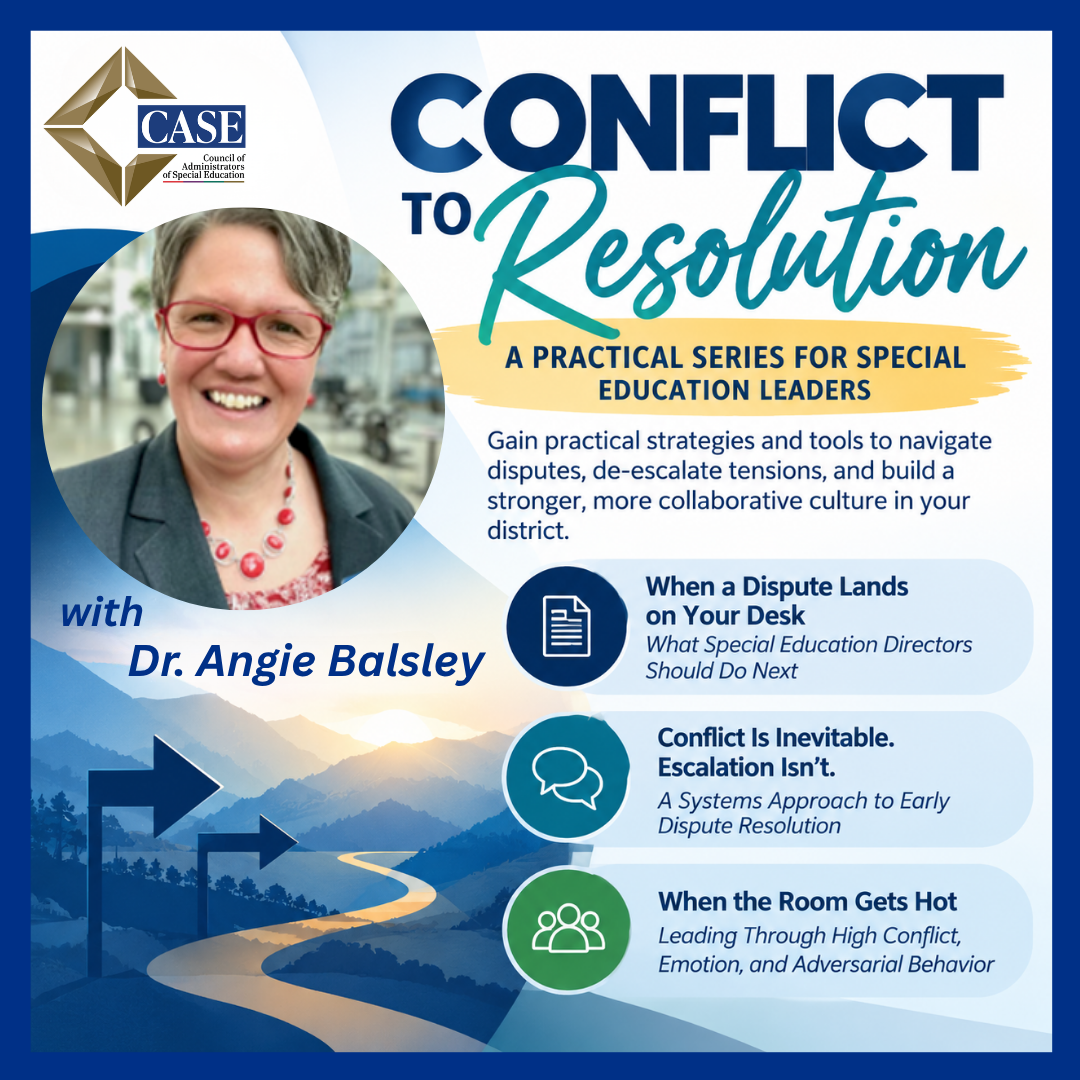 This three-part series features Dr. Angie Balsley. Founder and CEO of Unified Leadership, and is a Senior Consultant with the national Center for Appropriate Dispute Resolution in Special Education, CADRE. A former special education director and longtime CASE leader, she brings more than two decades of experience in special education leadership, dispute resolution, and systems improvement. Her research and publications focus on preventing and responding to special education disputes, strengthening early dispute resolution capacity, and improving collaboration between schools and families.
Council of Administrators of Special Education (CASE)
1546 E. Bradford Parkway, Suite L100, Springfield, MO 65804© Copyright 2026. All rights reserved.
Privacy Policy